Why design-led businesses outperform

Design shapes how a business thinks, operates and creates value, yet many organisations still treat it as an afterthought. The businesses that outperform their competitors tend to do the opposite, using design to guide decisions from the outset.
McKinsey describes design thinking as “a systemic, intuitive, customer-focused problem-solving approach that organisations can use to respond to rapidly changing environments and to create maximum impact.” This shift is reflected in the growing number of Chief Design Officers and design leaders joining executive teams and boards, as organisations increasingly recognise the commercial value of design beyond aesthetics. However, adoption is still uneven, and many organisations continue to treat design as a finishing touch rather than something that shapes the process from the beginning.
The companies that consistently outperform their competitors take a different approach. They bring design thinking into the business early, using it to guide decisions, shape customer experiences, align teams and build clearer, more meaningful brands.
Apple is one of the clearest examples of this approach. From the beginning, the company understood that design was about more than aesthetics. Product design, packaging, retail environments, software and communications were all connected through a clear philosophy of simplicity, usability and human-centred innovation.
Strong foundations create stronger brands
Like Apple, the most successful design-led businesses begin by understanding their audience and establishing strong brand foundations. A clear purpose, meaningful positioning and a consistent brand story provide a framework for decision-making and help businesses stay aligned as they grow.
Without these foundations, brands often become inconsistent. Products, services and communications can end up shaped by individual opinions or short-term priorities rather than a clear strategic direction. When foundations are strong, design becomes a way of expressing and reinforcing the brand across every touchpoint.
This matters because customers increasingly value trust, consistency and experience. In crowded markets, people often choose brands not just for product features or price, but because they understand them, trust them, and relate to what they stand for.
The business impact is clear. Research from McKinsey’s The Business Value of Design found that companies with strong design practices saw much higher revenue growth and shareholder returns. Companies in the top quartile of the McKinsey Design Index (2018) outperformed industry benchmarks, increasing their total returns to shareholders by 56 percentage points higher than their peers over a five-year period.
Clarity boosts performance
One of the biggest challenges for businesses today is the sheer amount of noise customers face. People deal with ads, social media, competing brands and endless streams of information. In this environment, clarity is extremely valuable.
Businesses no longer compete only on product quality or price. They also compete on how clearly they communicate value, how easily customers understand what they offer and how consistently the brand shows up across channels. Design-led companies address this by defining who they are, what they stand for and how they communicate. This clarity shapes everything from messaging and visual identity to digital experiences and customer interactions.
Without these foundations, communication often gets messy and confusing. Different departments take different approaches, messages vary across channels and customers are left unsure about what the business actually stands for. But when companies focus on their brand foundations, they can make complex ideas simpler, create easy-to-use experiences and keep communication consistent. Good design helps people understand information quickly and feel more confident engaging with it. This is especially valuable for businesses entering new markets, launching new products or going through periods of growth.
Research consistently links clarity and consistency with stronger customer outcomes. Clear branding and a user-centric approach makes it easier for customers to understand, trust and engage with a business (Earley Information Science). Consistency also strengthens brand recognition and recall, helping businesses build long-term trust and value over time (Forbes), and can have a significant impact on revenue (Capital One – Branding Statistics).
The same principles make an impact internally, too. Clear communication helps employees, stakeholders and investors understand the business, creating stronger alignment and more effective decision-making across the organisation.
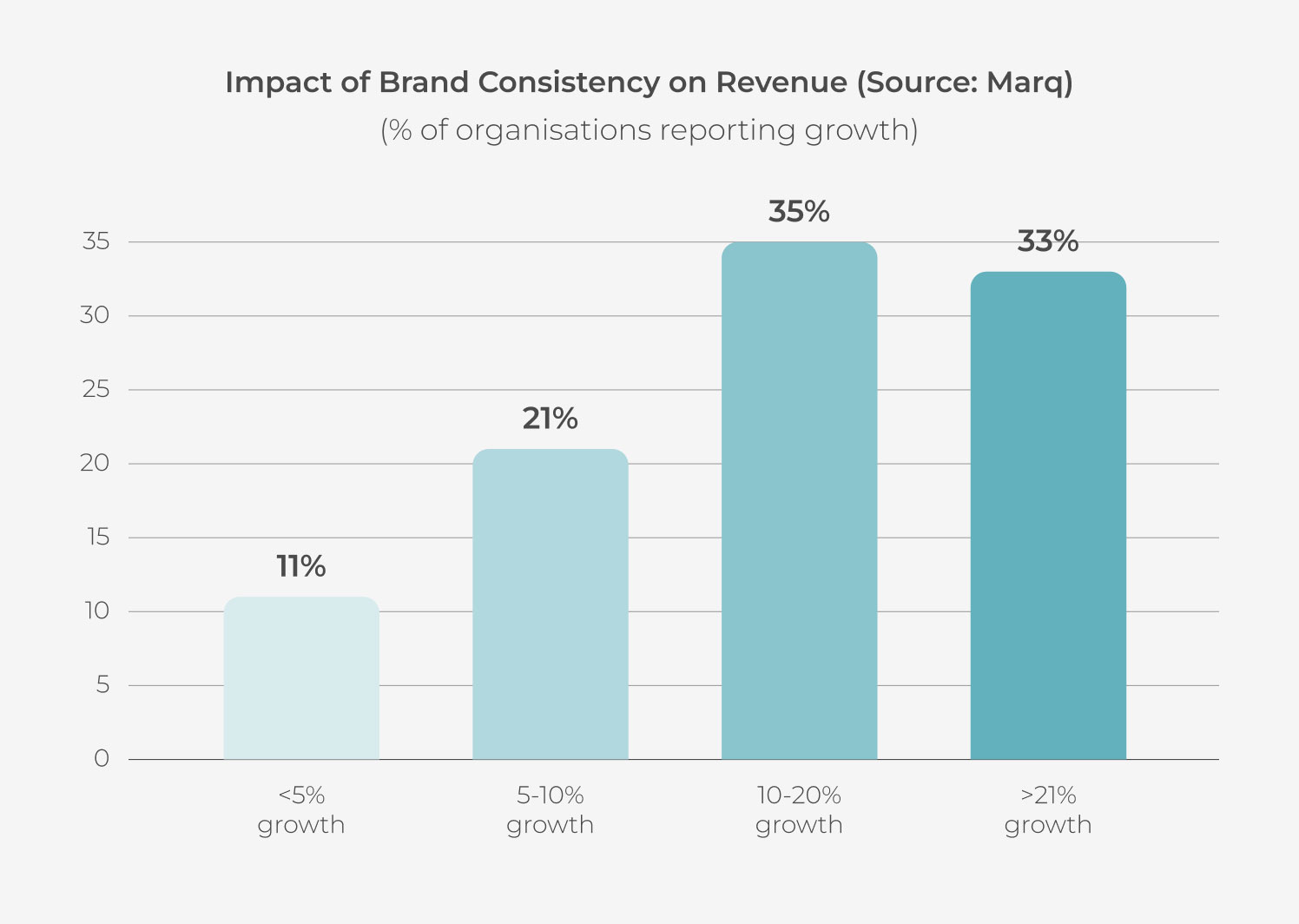
Brand Finance’s Global 500 reports regularly demonstrate the commercial value of strong brands, while PwC’s Trust Survey highlights the role trust plays in customer behaviour and business growth. Together, these findings reinforce that clarity is far more than a communication benefit, but a real business advantage.
Better decisions, made quicker
One of the less obvious benefits of a design-led approach is better decision-making. When people understand what the brand stands for and the experience the business wants to create, decisions become easier and more objective. Design systems, shared frameworks and clear brand principles give internal teams a common reference point. Instead of endless debates fuelled by personal preference, teams can judge ideas against set criteria.
This leads to better teamwork between departments and improves relationships between marketing, product, sales and leadership teams. It also delivers tangible business benefits. Fewer revisions reduce wasted time, faster approvals accelerate launches and stronger alignment helps prevent duplicated effort.
Many businesses struggle with slow decision-making because projects become stuck in cycles of conflicting opinions, subjective feedback and shifting priorities. Teams work separately, priorities keep changing and progress slows down because there’s no shared way to judge what’s right.
Design-led organisations avoid many of these challenges by creating shared systems and principles that guide decision-making. McKinsey’s research into design leadership highlights operational benefits including improved collaboration, greater efficiency and faster speed to market.
Design-led thinking is not only about encouraging creativity. It is also about creating better systems for decision-making.
Design-led innovation
Today, innovation isn’t just about the latest advances in technology. It’s also about solving problems better, improving experiences and identifying unmet customer needs. Businesses with strong brand foundations are often better positioned to innovate because they have a clearer understanding of who they are, what they offer and the value they want to create. That clarity provides focus, helping organisations pursue innovation that is relevant, meaningful and strategically aligned rather than simply following trends.
Design-led businesses approach innovation through research, testing and experimentation. Instead of making assumptions, they use customer insights, prototypes and feedback to refine ideas before making major investments. This lowers risk and makes it more likely that they’ll create products, services and experiences that people actually want and need. Early testing also helps spot potential issues before launch, saving both time and money.
Collaboration is another defining characteristic of design-led innovation. Rather than being confined to a single department, innovation becomes a shared effort involving leadership, strategy, design, product, marketing and customer insight teams. This cross-functional approach often leads to stronger ideas, faster learning and more effective outcomes.
McKinsey’s research has shown again and again that strong design practices lead to better business results and more innovation, especially when customer feedback loops and ongoing development are part of the process.
Systems enable scale
Modern brands exist across more touchpoints than ever before. Websites, apps, social media, campaigns, presentations, advertising, customer support and internal communications all contribute to how a business is perceived. Without clear systems, maintaining consistency becomes increasingly difficult.
A strong brand strategy provides direction for how a business looks, communicates and behaves. Design systems then translate those principles into practical tools that teams can use consistently. These systems may include visual guidelines, messaging frameworks, UX patterns, templates, content structures and digital component libraries.
Uber’s Base Design System is a strong example, developed to bring multiple products and experiences together while still allowing flexibility for individual products to meet specific user needs.
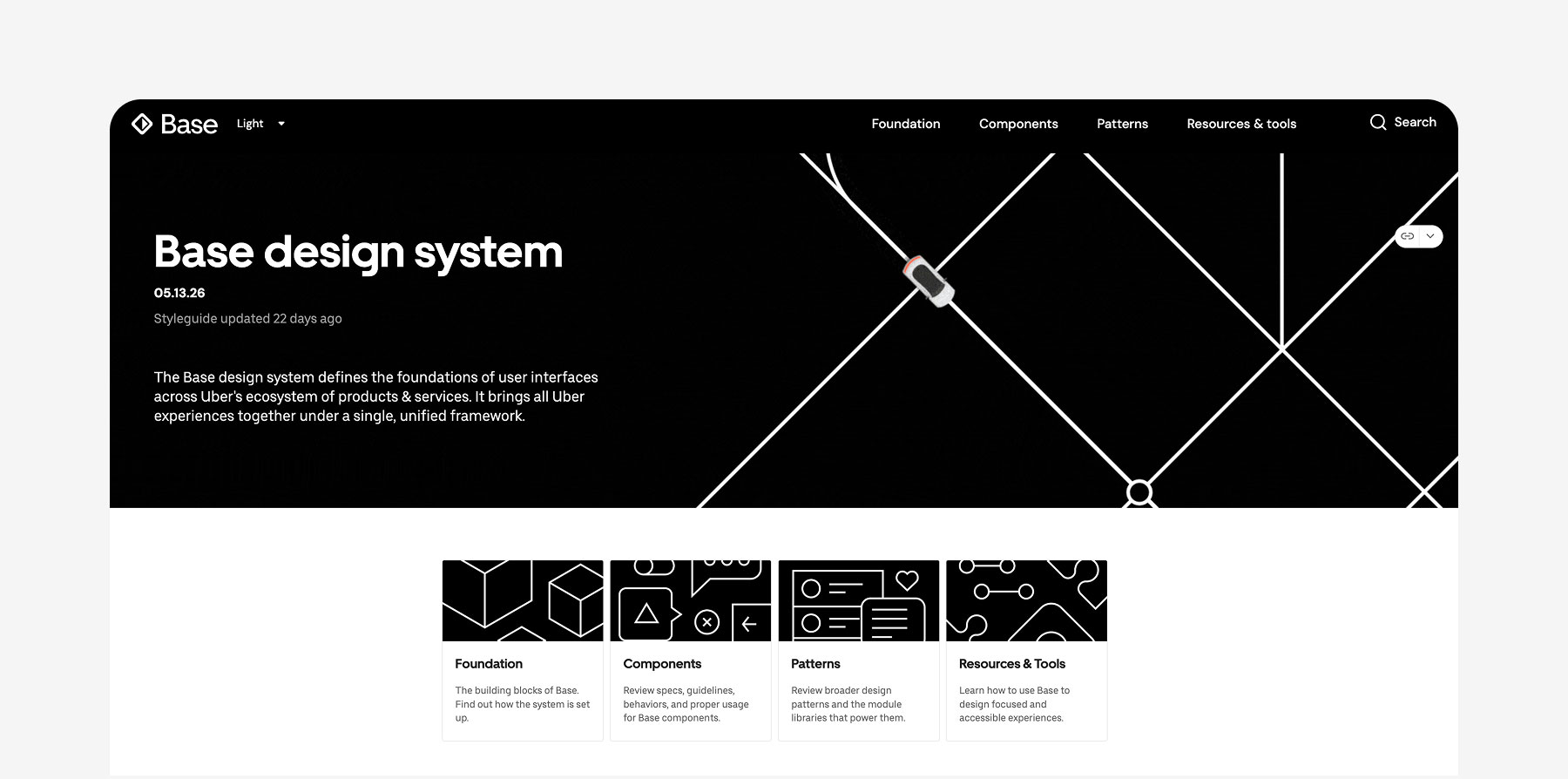
The benefit of these systems isn’t just that things look and sound the same. They improve efficiency, reduce duplicated effort and make it easier to scale content, products and experiences without compromising quality.
This matters even more as businesses grow. Without systems, scaling up often leads to confusion. Different teams see the brand in different ways, customer experiences become uneven and inefficiencies increase.
Design-led companies avoid these problems by treating systems as part of their core strategy, not just creative work. The long-term return can be substantial – from faster production and lower design costs to stronger brand recognition and better customer experiences.
What this means for your business
Becoming more design-led starts with bringing design thinking into strategic conversations from the outset rather than treating it as a final stage in the process.
The most effective organisations establish strong brand foundations first. They define their purpose, positioning, values and story clearly enough to guide decision-making across the business. Design then becomes a way of expressing and reinforcing those foundations consistently across every touchpoint.
It also means measuring design by its business impact rather than purely its creative output. The most successful organisations look at how design influences efficiency, customer experience, trust, conversion, retention and long-term brand value.

While studies such as McKinsey’s The Business Value of Design and the Design Management Institute’s Design Value Index have helped demonstrate the connection between design maturity and business performance, the principle remains simple. Businesses that embed design into strategy tend to make better decisions, create stronger experiences, innovate more effectively and build more valuable brands over time.
As competition increases and customer expectations continue to rise, the gap between design-led organisations and those that treat design as an afterthought is only likely to grow.
Last updated June 2026