Brand fundamentals: 8 essentials you need to launch your business
Launching a business involves a lot of moving parts, and your brand is one of the most important to get right. But you don’t need a huge collection of brand assets to get started. You need a few key things that help your business look credible, communicate clearly and give people a reason to take notice. This checklist covers the minimum brand essentials to have in place before launch, alongside a few things worth considering as you grow.
The must-haves
1. A clear purpose, mission, vision and positioning
Be clear on why your business exists, what it aims to achieve and where it wants to go. A strong purpose, mission and vision give your business direction, help differentiate it from competitors and give potential investors a reason to believe in its future. This is particularly important in sectors like deep tech, where the journey to commercial returns can be longer.
2. A name that’s ready to use
Before committing to a name, search for existing businesses using the same or similar names, particularly within your sector. Check for potential trademark conflicts, as well as domain and social handle availability. It’s worth doing these checks early, before investing in an identity or launch materials.
Useful starting points include the UK Intellectual Property Office trade mark search, TMview and WIPO’s Global Brand Database. These are useful initial checks, but aren’t a substitute for professional legal advice if you aren’t sure.
3. A flexible, usable visual identity
You need more than a logo file. Make sure you have the right versions for the places your brand will appear, including full-colour, reversed and single-colour logos, plus horizontal or stacked variations where necessary. Check that your logo remains clear at small sizes, such as social profile images and browser favicons, as well as larger applications like event graphics and signage. Test everything on both mobile and desktop before launch.
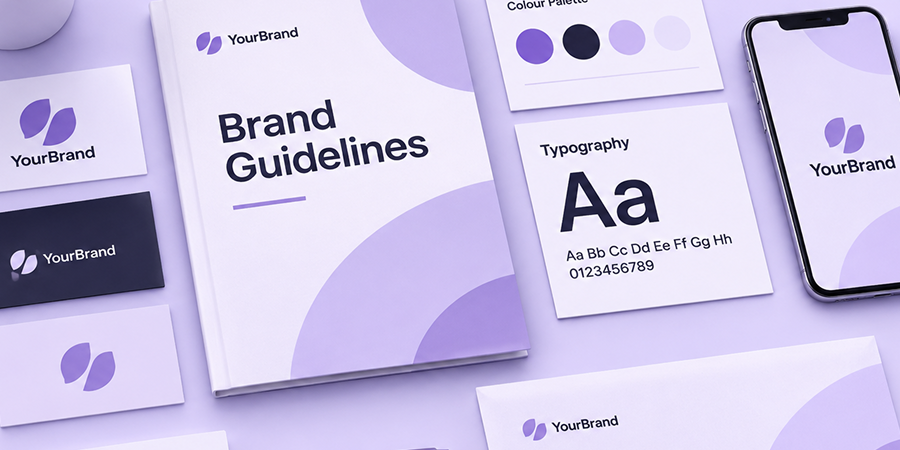
4. A simple set of brand guidlines
Put the essentials in one easy-to-access document so anyone working on the business can use the brand consistently – a single page is often enough to start with. Include approved logo files and basic usage rules, brand colours with their codes, typefaces and key guidance on tone of voice. Keep it practical, clear and easy to share with colleagues, suppliers and agencies.
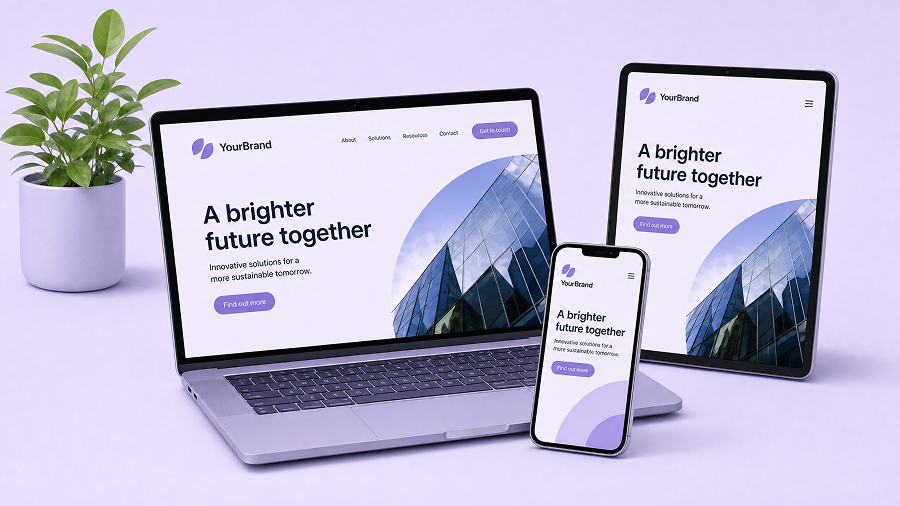
5. A website and branded email address
At the very least, secure a domain that matches your business name and use it for a branded email address. You should also have a simple website or one-page landing page that explains what you do, who you help and how people can get in touch. It doesn’t need to be a fully developed website from day one, but it should give potential customers, partners and investors somewhere credible to find out more.
6. The right materials for launch
Think about how you want to introduce your business. Will it be a quiet soft launch, a launch event, a press announcement or a coordinated campaign? Your approach will determine what materials you need.
At a minimum, make sure you have a short company or product overview that you can send to interested customers, investors or partners, a selection of approved, high-quality imagery and a clear way for people to make an enquiry. If you’re planning press activity, prepare a simple media kit with key business information, approved images and relevant press assets.
The nice-to-haves
7. A focused social media presence
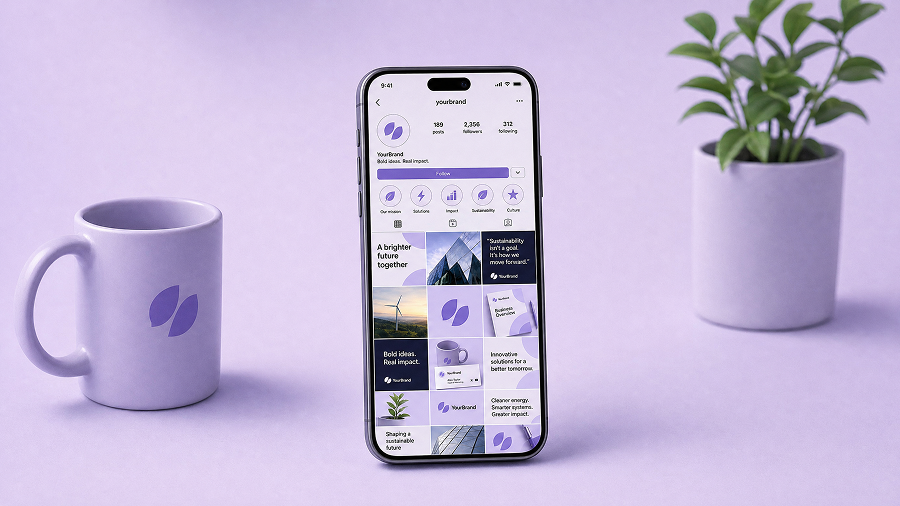
You don’t need to be on every platform straight away. Choose one or two that make sense for your audience and where you can realistically maintain a useful presence. Set up your profiles with consistent branding, a clear description of what you offer and the right contact details. It’s better to look active and considered in a couple of places than spread yourself too thin across five or six.
8. A presence in relevant searches and directories
If your business serves a particular area or has a physical location, set up a Google Business Profile so people can find accurate information about you in Search and Maps. It’s also worth considering relevant industry directories, trade associations or sector-specific listings. These won’t be essential for every business, but the right ones can help build visibility and credibility from the outset.
Ready to launch?
You don’t need everything to be perfect before you get started. The aim is to have the essentials in place so your business looks credible, communicates consistently and is ready to make a strong first impression. Start with the basics, build on them as your business grows and make sure your brand has room to grow with it.
Last updated November 2026

