Brand foundations: What they are and why they matter
A strong brand starts with a clear sense of where the business is going. Brand foundations form a key part of your business strategy, providing a basis for building your company and influencing how you approach the decisions you make and the way you present yourself to the world.
These foundations can support you through the start-up phase and continue to provide direction as your company grows and evolves. As we explore in our article, From start-up to scale-up, they become particularly valuable as a company grows, when the business may be developing in a new direction or more people are joining the team. Having a shared understanding of what the business stands for helps keep the brand connected to that direction as it grows, while giving everyone a clearer reference point for the decisions they make.
When those foundations are clearly defined, they give the business a stronger basis for developing a brand that reflects what it stands for and where it is heading.
Four brand foundations every business should have
There are four areas that provide a useful starting point for defining the foundations of a brand. Together, vision, mission, positioning and brand strategy give the business a clearer sense of direction, while providing the thinking that will shape how the brand develops.
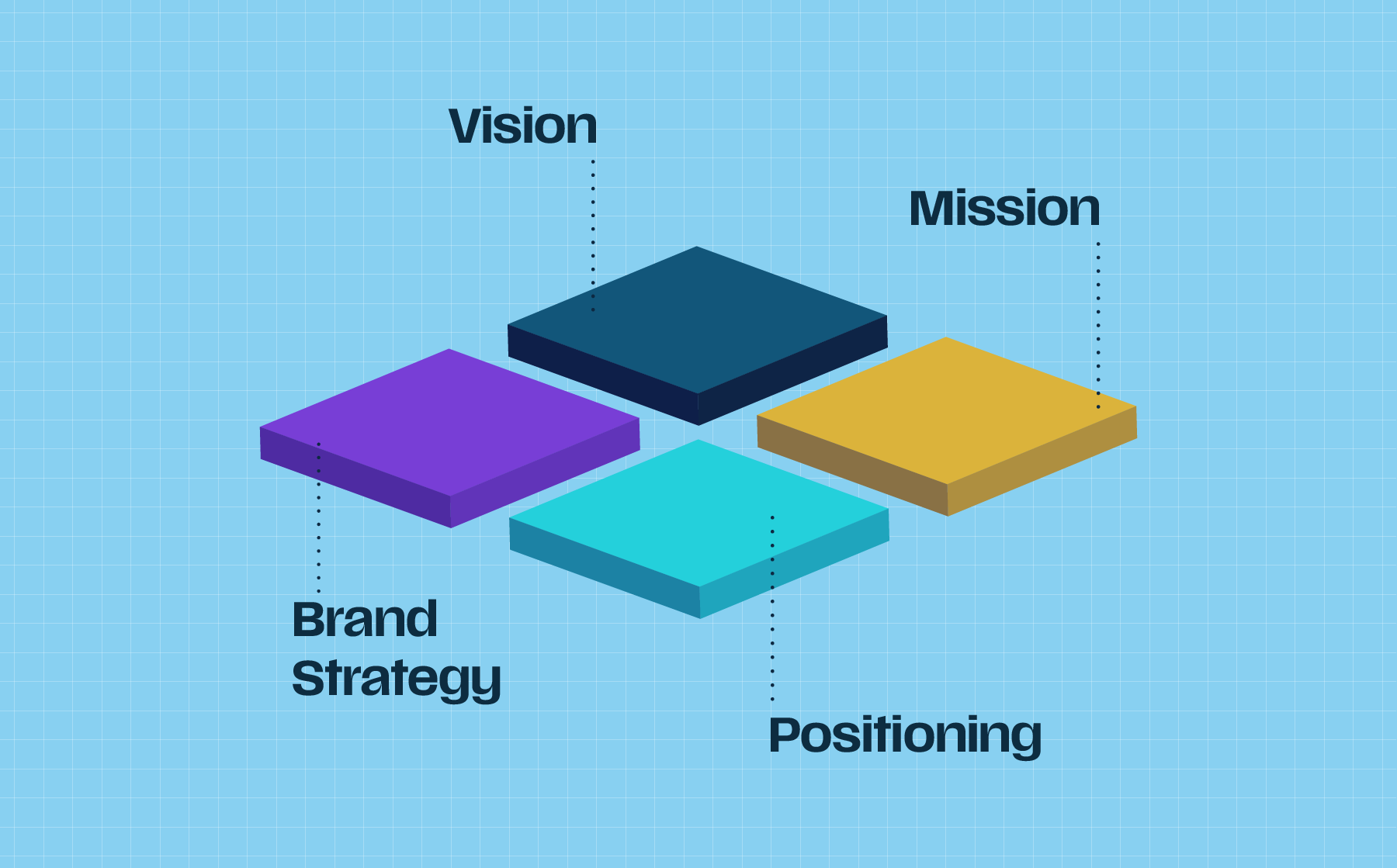
1. Vision
Your vision sets the long-term direction for the business. It describes where you want the company to be heading and gives people a sense of what you are working towards.
A clear vision helps keep the brand aligned with the direction of the business as it develops. It can give the wider team a shared sense of ambition and provide useful context when decisions are being made about the future.
2. Mission
Your mission brings the focus back to the business as it is today. It describes the role the company exists to play and the purpose behind what it does.
A clear mission helps people understand what the business stands for and gives the brand a stronger sense of purpose. It can also provide a useful reference point when the business is making decisions about how it operates and develops.
3. Positioning
Positioning defines the place you want the business to occupy in the market. Getting there means looking closely at the customers you want to reach, what matters to them and where the business can offer something genuinely different.
It is often where some of the most useful conversations happen because it requires the business to be specific about who it is for and why those customers should choose it. Good positioning gives the rest of the brand a clearer direction and makes it easier for customers to understand where the business fits.
4. Brand Strategy
Brand strategy connects the vision, mission and positioning to the way the brand works in practice. It turns the thinking behind the business into a clear approach for how the brand should communicate and behave.
This gives the business a common thread for decisions across its communications and customer experience, so that the different ways people encounter the brand feel connected and aligned by building a recognisable voice and style.
Why the foundations matter
Brand foundations give a business a clear understanding of what it stands for and where it is heading. That thinking should then shape the brand as a whole, from how it looks and sounds to how it is experienced as the business develops.
The aim is to create a brand that feels true to the business today while giving it a clear direction for what comes next.
How you get to the right foundations
Brand foundations are a key part of any business plan and are not something that should be decided in isolation or written simply because a set of brand guidelines needs a few statements at the front. The process needs to reflect your business plan and involve the people who have a meaningful role in shaping its future. It starts with understanding the business and the market around it, with competitor and industry research providing useful context before the key stakeholders explore the questions in more depth.
Bringing the right people into the room creates space to have a more open discussion about the direction of the business and the role the brand foundations needs to play within it. A focused workshop or session can work particularly well here, giving stakeholders dedicated time and space to consider the questions together. Having this session facilitated by someone external, such as a branding agency or consultant, can also help keep the conversation focused, make sure different perspectives are heard and keep everyone on track. Carefully considered questions and exercises can help move those conversations beyond the obvious answers, while also bringing different views to the surface so they can be discussed and resolved. It is easy for these discussions to become focused on individual words, particularly when people are trying to find the perfect way to express an idea, but the priority at this stage is reaching a shared understanding of the sentiment and purpose behind the brand. The language matters when the foundations are eventually documented, but it is more important that the people shaping the business are aligned on the overall sentiment.
Brand foundations are rarely agreed on the first draft, and there is usually some discussion and refinement before they are ready to be shared with the wider team. This review process helps ensure they accurately reflect the agreed direction before they are put into practice.
Once finalised and documented, the foundations provide a clear record of the brand direction and a shared point of reference that everyone can return to as the brand develops.

Putting the foundations into practice
The value of brand foundations comes from how they shape the wider business strategy, providing a clear basis for decisions across the organisation and helping the brand stay aligned with the company’s direction as it develops.
The foundations will also inform how the brand is expressed. The visual and verbal identity should feel like a natural expression of the foundations, rather than separate creative layers applied afterwards. A business that wants to be seen as straightforward and direct, for example, would not want an identity that feels overly complicated with cryptic messaging. But the role of design can go beyond how a business looks and sounds. Design-led businesses bring design thinking into the way they approach challenges and make decisions, using it as part of how the business operates rather than something that is applied at the end. We’ve delved into this further in our article, Why design-led businesses outperform.
As the business grows, the foundations should continue to guide decisions across the organisation. With more people involved in shaping the brand, these foundations provide a shared understanding of what the company stands for and give teams greater confidence when applying it to their own work.
When to revisit your foundations
Brand foundations should not be treated as a one-off exercise. As the business develops, there will be points when it makes sense to step back and consider whether the brand foundations still reflect the direction the company is taking and it’s businesses strategy.
A new service or a move into a different market or geographical location can be a useful moment to review them, particularly if the type of customer you want to reach has also changed. The same applies at significant stages of growth or entering a new phase, such as preparing for investment. The aim is not to rewrite the foundations whenever something changes, but to check that they still provide the right direction.
If that review shows that the business has evolved significantly, the foundations may need more than a light refinement. Returning to the process gives the right people an opportunity to discuss what has changed, before agreeing whether the foundations still reflect the business you are building. This is why they should remain part of the way the business makes decisions, rather than becoming a document that is defined once and then left behind.
Last updated October 2026

